The Cuts Suck. Fix Education. campaign, spearheaded by the British Columbia Federation of Students (BCFS) and its member locals, calls on the BC government to restore funding for public post-secondary institutions to at least 75% of operating budgets. Meaningful reinvestment is needed to stop the cycle of program cancellations, staff layoffs and service reductions that are making it harder for students to graduate.
“Tuition fees rise every year, but courses are being cut, layoffs are increasing, and student services are overloaded,” said Debi Herrera Lira, Chairperson of the BCFS. “Students are doing their part, but the government is failing to do theirs. Fixing education isn’t optional—it’s non-negotiable.”
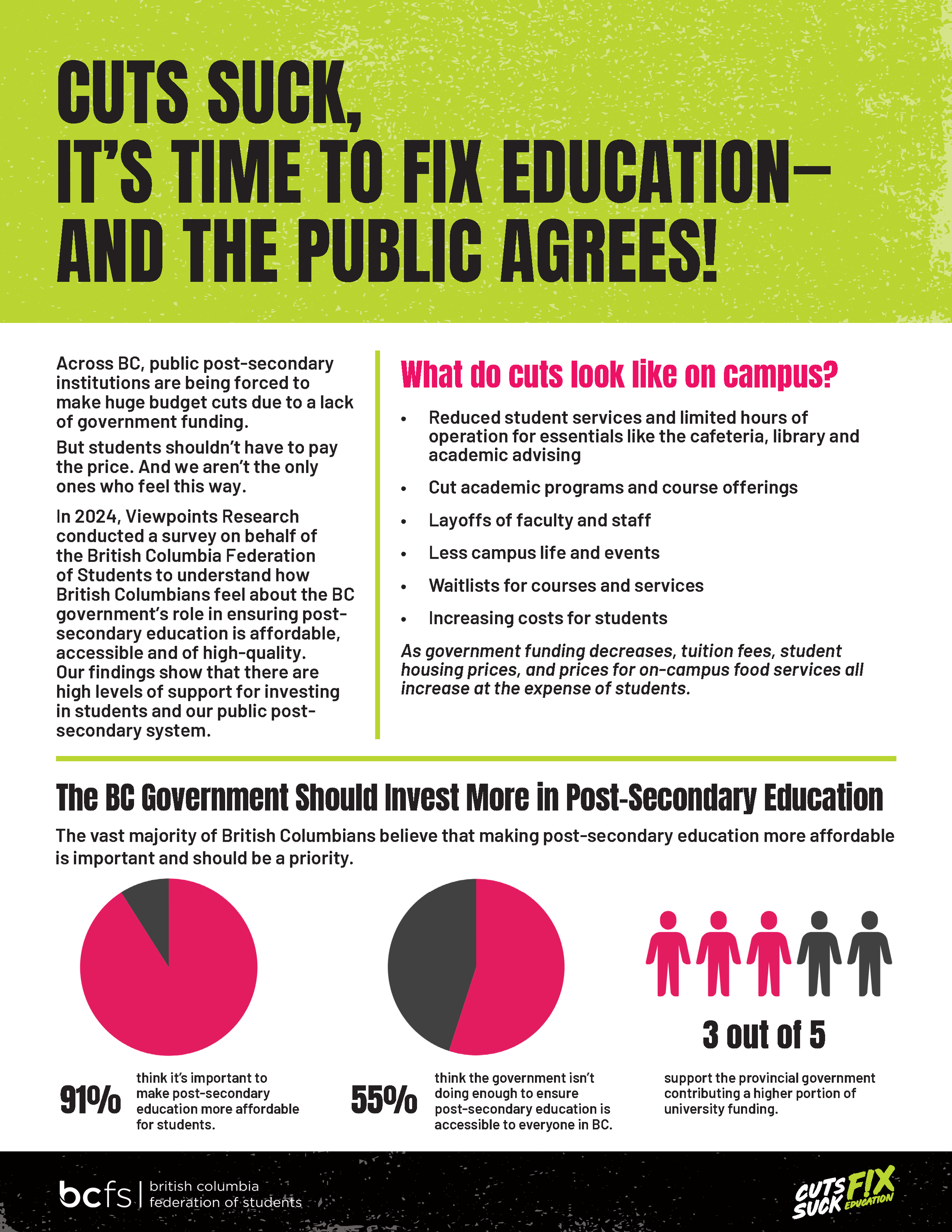
In the last two years, students have seen dramatic changes on their campuses. More than 68 programs have been cut, paused or suspended. At least 748 faculty and staff have been laid off, which does not account for hiring freezes, vacancies and sessional instructor contracts that have not been renewed. Counselling, academic advising and resource centres that handle accommodation requests are overburdened. And necessities, including Indigenous student services, grocery shuttles and library and cafeteria operating hours, are being reduced.
Programs disappearing across the province include nursing and gerontology programs, project management, hospitality management, culinary programs, dental assistant programs, adult upgrading, and numerous arts and languages programs.
“Every day, we hear stories from students who can’t get into the courses they need to graduate or who are forced to transfer because their program has been eliminated and they have no ability to complete their education without uprooting their lives and moving to another city,” said Herrera Lira. “Every cut means delayed graduations, students paying another year of tuition fees and rent, and future workers held back from entering the job market.”
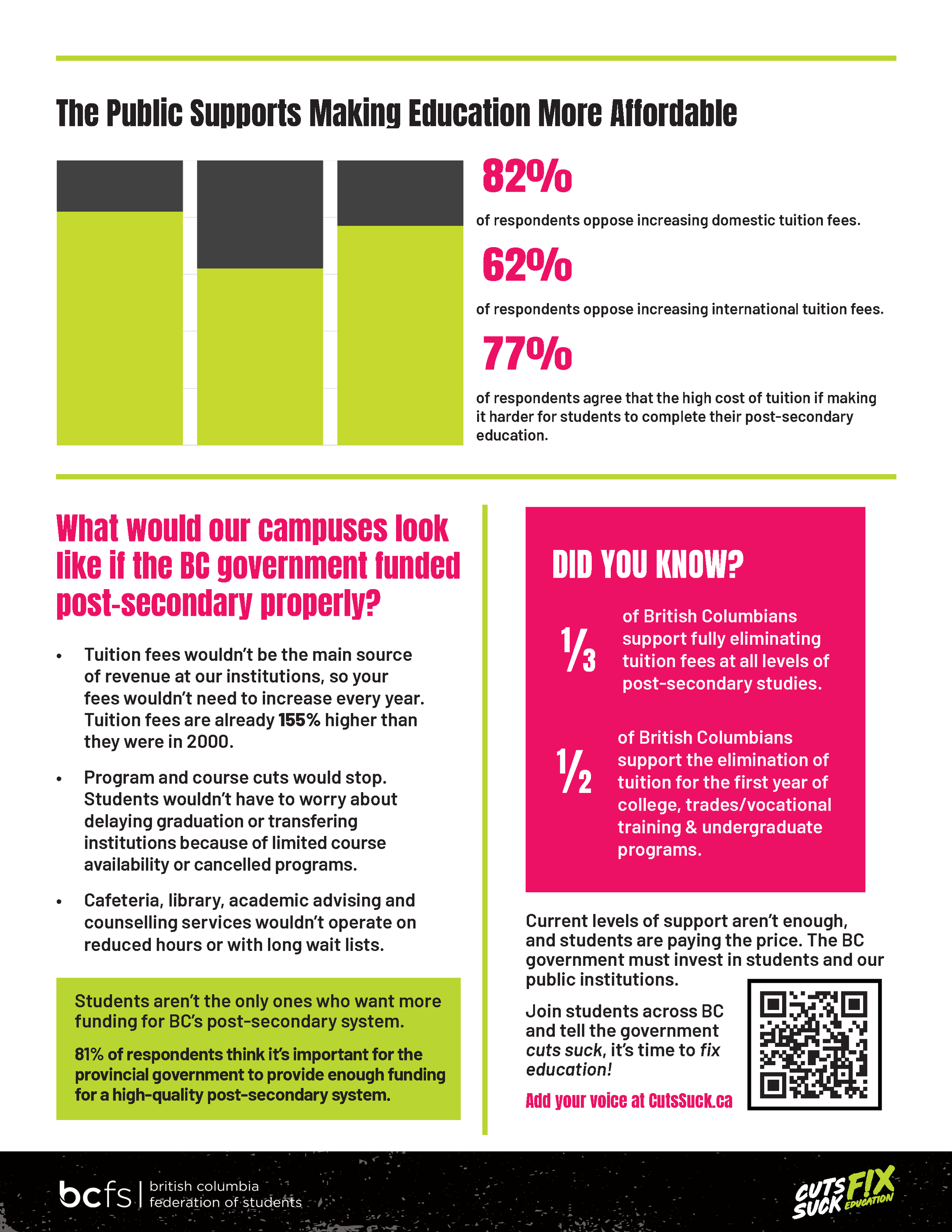
Public funding for post-secondary institutions has dropped to just 40% of operating budgets, down from 68% in 2000. Over the same period, tuition fees have increased by 155%. Students and their families now shoulder the financial burden of post-secondary education as institutions rely on tuition fees to make up for decreased government funding.
For years, student advocates warned this funding model was unstable. Those warnings became reality in January 2024 when the federal government capped international study permits. With enrolment falling, tuition revenues are collapsing, and institutions are making deep cuts to balance their budgets, at students’ expense.